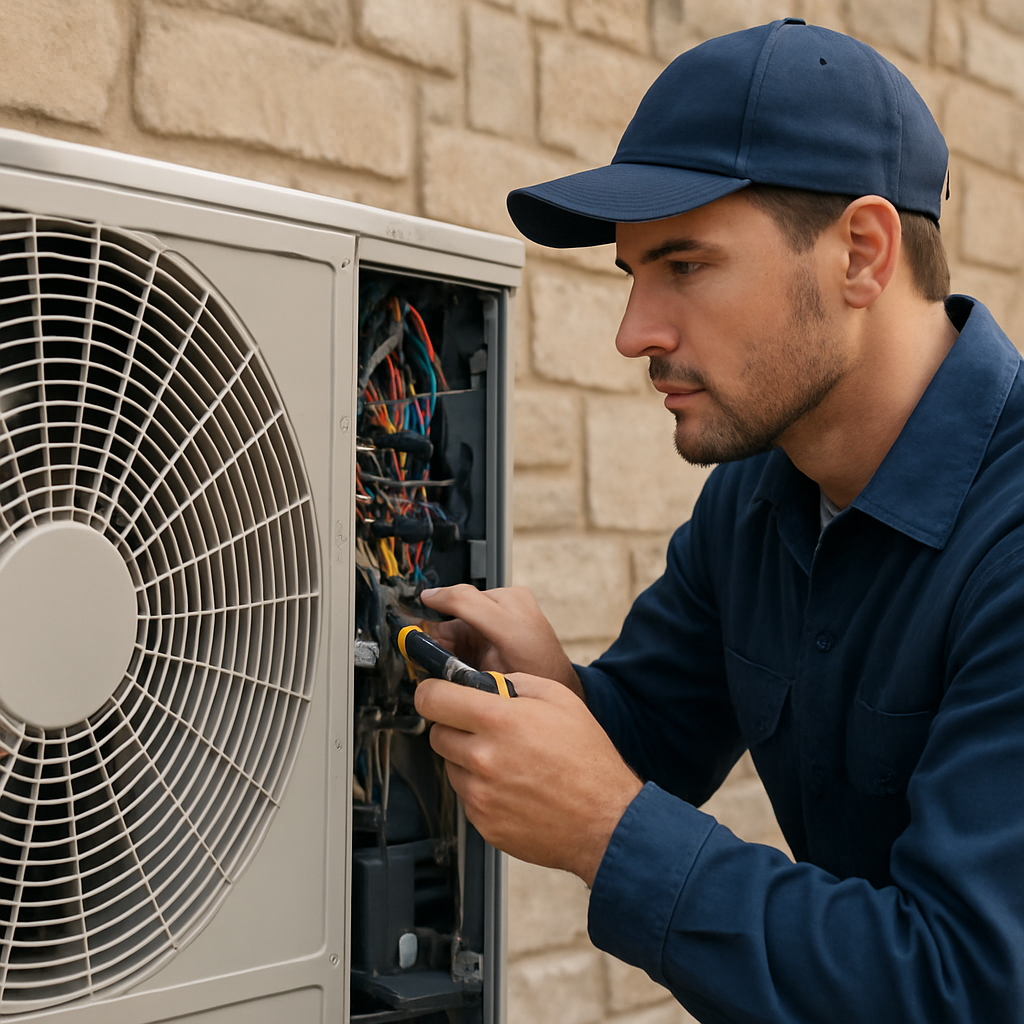
When your furnace quits in the middle of a Bethlehem cold snap or the air conditioner dies on a humid summer day, the right contractor makes the difference between a same-day fix and weeks of disruption. This practical guide shows homeowners how to vet local hvac bethlehem pa contractors, secure fast emergency service, and compare itemized quotes for energy-saving upgrades with realistic payback estimates. Use the checklists and call scripts to speed repairs, protect warranties, and avoid common overcharge traps.
Why choosing a local Bethlehem HVAC contractor matters
Key point: Hiring a local contractor for hvac bethlehem pa is not a nicety – it changes diagnostics, parts availability, and how fast your house gets comfortable again. Local firms know what actually fails in Bethlehem homes and they plan their vans and schedules around those failure modes.
Local diagnostic priorities that matter
Why it matters: Bethlehem winters and humid summers create different failure patterns than other regions. Correcting a heat pump defrost cycle or diagnosing duct leakage in older rowhouses requires a technician who sees those problems repeatedly, not someone reading a generic checklist.
Practical detail: Local HVAC services Bethlehem PA are more likely to run a Manual J load for proper sizing, inspect older masonry chimneys and venting, and check common regional issues like undersized return paths or legacy oil-to-gas conversions. That reduces the risk of repeated callbacks after a replacement.
Proximity, parts, and local logistics
Operational tradeoff: Proximity speeds first response and often enables same day small repairs, but local companies can still be overwhelmed during heat waves or deep freezes. Being local reduces travel time, but it does not guarantee instant service when the entire Lehigh Valley is calling.
- Stocking matters: Ask whether the company carries common parts for your brand or model and how long parts orders take.
- Permits and inspections: Confirm the contractor is familiar with Lehigh County permit norms and will pull required permits when installing heating system replacements. See Lehigh County for local rules.
- Local fuel familiarity: Ensure they work on the fuel your home uses – gas, oil, or dual fuel heat pump setups are common in Bethlehem.
- Emergency coverage: Verify their emergency HVAC service Bethlehem PA policy and expected arrival windows during peak seasons.
- Licensed HVAC technicians Bethlehem PA: Confirm technician certifications rather than relying on the company name alone.
Concrete Example: A heat pump in a Bethlehem rowhouse was icing on the outdoor coil during a January cold snap. A local contractor with stocked defrost kits and a compatible control board replaced the part the same day; a nonlocal crew would have needed to order the board and return, turning a single visit into two.
Local knowledge cuts unnecessary replacement risk. Contractors who understand Bethlehem housing stock are likelier to recommend duct repairs or controls before upsizing equipment.
Next consideration: When you call, have the system nameplate photos ready and ask specifically about local experience with your home type and model. That one question separates contractors who can fix your problem today from those who will need multiple trips.
Credentials and certifications that prove competence
Start here: the right credentials reduce risk, they do not guarantee a good job. Certifications and dealer status narrow the field to contractors who understand refrigerants, manufacturer warranties, and safe combustion practices — but you still need references and a clear written scope.
Which credentials matter and why
- EPA 608 refrigerant certification: Required to handle refrigerant safely and legally; no EPA card usually means the tech will subcontract the work or cut corners.
- NATE certification: Signals a technician passed industry tests and can diagnose systems; useful for technical credibility but not a substitute for documented job experience on your equipment.
- Manufacturer dealer/installer status: Matters for extended warranties, factory-backed commissioning, and rebate eligibility; dealers often receive manufacturer training on specific models.
- Business registration and insurance: Ask for the business registration or registration number and a certificate of insurance showing general liability and workers compensation limits.
- Specialty training: Look for cold-climate heat pump training or manufacturer-specific classes when replacing heat pumps in Bethlehem — that training affects long-term performance in our winters.
Practical tradeoff: hiring a dealer with manufacturer status usually costs more up front but preserves warranty coverage and simplifies rebate paperwork. An independent contractor may be cheaper, but expect more due diligence on paperwork and warranty handling.
Quick verification steps: ask for certificate ID numbers or a digital photo of the credential, then verify company standing at Pennsylvania Public Utility Commission and reputation at Better Business Bureau. If they claim dealer status for a brand, confirm the claim on the brand's online dealer locator.
Concrete Example: A homeowner in Bethlehem scheduled a same-day AC swap. The contractor listed as an authorized dealer on the equipment maker's site completed a factory startup and registered the extended compressor warranty while a cheaper crew could not produce dealer paperwork; two years later a failed compressor was replaced under warranty without out-of-pocket cost to the homeowner.
Common misunderstanding: people assume a license alone equals competence. In practice, a balanced set of credentials plus recent, local job photos and at least one nearby homeowner reference gives a much higher probability of a one-visit fix and intact warranty.
Before you book, get photos of the techs credentials and the equipment nameplate. If a contractor hesitates, treat that as a material risk to scheduling, parts preparation, and warranty eligibility.
Next consideration: when you call, ask whether the quoted price includes manufacturer registration and permit handling — that single question separates contractors who protect your warranty from those who leave it to you.
How to evaluate speed and reliability for fast repairs
Speed is logistics, not a slogan. Fast repairs depend on who controls parts and technicians, how a company triages calls, and whether they have explicit rules for same-day response — not on how loudly they advertise emergency service for hvac bethlehem pa.
Start by probing the dispatch model. Ask whether the company uses its own W2 technicians or relies on subcontractors. In-house crews with assigned service areas are more likely to keep predictable arrival windows and consistent job ownership; subcontracting often produces longer handoffs and second visits.
Phone triage: the minimum questions that predict speed
- Arrival window: What is the guaranteed arrival window and what happens if you miss it?
- Parts policy: Which common parts will the technician carry for my brand and model, and how long would a parts order take?
- Ownership: Will the tech who diagnoses the problem complete the repair or will it be handed off?
- Fees and priorities: Is there an emergency fee, and do maintenance or membership customers get priority dispatch?
- Proof and communication: Will I receive an ETA text and a photo of the technician before arrival?
Interpretation guide. A dispatcher who answers those questions succinctly is showing process maturity. Hesitation on parts inventory or on who will own the repair is a red flag for delays. If they promise same-day but cannot confirm stocked parts for likely failure modes, expect follow-up trips.
Practical tradeoff: Paying a higher call or emergency fee often buys speed, but it does not guarantee a quality fix. Fast temporary repairs can be appropriate for vulnerable occupants or to prevent frozen pipes, while full repairs or replacements should be scheduled after a documented diagnosis to protect warranties.
Concrete example: In late July a Bethlehem homeowner lost cooling due to a burned blower motor. Contractor A operates a local parts hub and dispatched a technician with OEM motors; the swap was completed same day and the system returned to full capacity. Contractor B could have matched the price but needed to order the motor, which would have left the house without AC for 48+ hours — a reasonable cost difference depending on occupant risk.
Final judgment: Prioritize proven process over promises. For emergency hvac bethlehem pa calls, choose a contractor that can show recent local job ownership, clear parts policies, and a communications protocol — that combination predicts single-visit repairs more reliably than the cheapest quote.
Energy-saving upgrades that make sense in Bethlehem with equipment examples
Start where the money actually is: ductwork, controls, and blower efficiency often beat swapping to the highest-SEER outdoor unit. In Bethlehem houses with older ducts or leaky returns, fixing airflow and adding a variable-speed ECM blower delivers better comfort and measurable energy reductions before you spend on a new condenser or furnace.
Cold-climate heat pumps are the step-change most homeowners should consider. Modern inverter-driven models from manufacturers like Mitsubishi and Carrier keep useful capacity at subfreezing temps, and a properly specified cold-climate heat pump can replace a gas furnace in many homes. The tradeoff: you need a Manual J load and a plan for backup heat or dual-fuel controls in the coldest stretches, and installers must size for real winter load, not nameplate maximums. See Department of Energy guidance for heat pump basics at Heat Pump Systems.
High-SEER central AC units help in summer but can fail at dehumidification if oversized. Models like the Trane XV20i or Lennox SL25XCV use variable-capacity compressors to run longer at low speed, which improves humidity control in humid Bethlehem summers. That capability matters more than peak SEER when your house struggles with indoor dampness. Expect higher up-front cost and insist on matched coil and refrigerant charge verification at startup.
Controls, zoning, and simple retrofits that punch above their weight
Smart thermostats and zoning reduce runtime more than marketing suggests — if installed correctly. Devices such as Ecobee or Honeywell T9 allow setback schedules, remote sensors for occupied rooms, and integration with variable-speed equipment. The practical limit: thermostats cannot fix undersized duct runs or single-duct homes without additional dampers or a ducted mini-split strategy.
Duct sealing is the fastest payback upgrade for many Bethlehem homes, but access is the constraint. If ducts are in a finished basement or tight attic cavities, sealing costs spike. When ducts are inaccessible, prioritize targeted fixes like sealing returns, adding a well-placed booster, or switching zones to a ductless mini-split in the worst rooms.
| Equipment | Why it fits Bethlehem | What to check at install |
|---|---|---|
| Mitsubishi Hyper-Heating or similar cold-climate heat pump | Maintains heat capacity at low temps; reduces winter gas use | Manual J sizing, defrost control programming, manufacturer-certified installer |
| Trane XV20i / Lennox SL25XCV (variable-capacity central AC) | Better humidity control and part-load efficiency in humid summers | Matched coil, correct refrigerant charge, startup report |
| Variable-speed ECM blower retrofit | Improves comfort and reduces fan energy; helps low static systems | Confirm motor compatibility, check PSC-to-ECM wiring and airflow testing |
| Smart thermostat (Ecobee, Honeywell T9) | Enables scheduling, zoning, and some utility rebate eligibility | Verify multi-stage and heat pump compatibility; sensor placement |
| Duct sealing and insulation | Often largest immediate reduction in wasted heating/cooling | Blower door or duct leakage test if available; measure before/after airflow |
Real-world use case: A Bethlehem owner replaced a 20-year-old gas furnace and 10-SEER AC with a cold-climate heat pump plus targeted duct sealing. Post-install, winter electric usage rose but total fuel bills fell and upstairs humidity improved in summer because the heat pump ran longer at low speed. They qualified for a federal weatherization or heat pump tax credit and a local utility rebate, which shortened payback — but the install required a supplemental electric heat source during extreme cold and careful commissioning to preserve warranty coverage.
How to get accurate itemized estimates and compare quotes
Direct point: A useful estimate names the exact equipment, lists labor separately, and shows permit and startup services. If you accept a replacement or major repair without model numbers, manufacturer registration, and a startup checklist, you will create warranty and performance problems later.
What an accurate, usable estimate must include
- Equipment details: brand, full model numbers, and rated efficiencies such as SEER, HSPF, or AFUE
- Scope of work: exactly what is replaced or repaired, what is left as-is, and any duct, control, or electrical work required
- Labor and fees: labor hours or flat labor line, permit fees, disposal fees, and any subcontractor costs
- Startup and commissioning: explicit statement that a startup check will be performed, what it covers, and who will register the equipment with the manufacturer
- Timeline and milestones: expected start date, days on site, and contingency for parts delays
- Warranty language: manufacturer warranty plus any contractor workmanship warranty, who registers the warranty, and transferability
- Payment terms and contingencies: deposit amount, final payment conditions, and acceptable payment methods
Practical insight: Ask every bidder to return the estimate in the same format so you can compare like for like. A simple spreadsheet with columns for model number, efficiency, equipment cost, labor, permits, startup, and warranty cost will expose low bids that omit critical items.
Tradeoff to consider: The lowest sticker price is rarely the best value for replacements in Bethlehem. Paying more for a dealer who includes factory startup and registration often saves money if a compressor or control fails, because warranty replacements can be expensive without proper registration and startup documentation.
Concrete example: A homeowner received three bids for a central AC replacement. Bid A listed the exact condenser and coil model, included a startup report, and added permit and disposal fees. Bid B was 20 percent cheaper but listed only a generic condenser and asked for cash only. Bid C bundled duct sealing and a smart thermostat with a clear labor tab. The homeowner awarded the job to Bid A after confirming the dealer status and startup inclusion because the warranty registration and documented charge protected long term cost.
How to request projected operating costs and verification
Actionable ask: Request a projected annual energy use or operating cost for each bid and the assumptions behind it – runtime hours, local heating fuel price, and climate assumptions. If they provide a Manual J or Manual S, treat that as higher quality; if they refuse or handwave, that is a reliability risk.
What to expect in practice: Contractors will often approximate savings. That is fine if they show inputs. Insist on the numbers they used rather than a generic percent savings claim. For guidance on efficiency metrics and credible comparisons, see ENERGY STAR and Department of Energy heat pump guidance.
Red flag: an estimate without model numbers, startup commitments, or permit line items. Do not sign until these are added in writing.
Next consideration: Before scheduling work, use the spreadsheet method and call the manufacturer to confirm dealer status when warranty or rebate eligibility is a deciding factor.
Maintenance plans, warranties, and preventing repeat visits
A well structured maintenance plan prevents most repeat visits and protects warranty coverage — but only when the plan matches the equipment, the installer, and Bethlehem climate realities. A generic tune up rarely stops progressive failures or satisfies manufacturer conditions for extended coverage. Insist on written scope and documented outcomes.
What an effective plan actually delivers
A useful plan bundles two things: a repeatable service protocol that catches small failures before they escalate, and contractual benefits that change the economics of a callout. That means scheduled inspections tied to specific checks, priority scheduling during peak seasons, discounted diagnostics or parts, and clear recordkeeping that you can show to a manufacturer if a warranty claim is needed.
Practical limitation: maintenance reduces risk but does not eliminate age related failures or latent manufacturing defects. Older compressors, corroded coils, and intermittent electrical faults can still fail despite regular service. Maintenance changes the odds in your favor; it does not create guaranteed lifetime performance.
Concrete Example: During a fall tune up in Bethlehem a technician found a slow refrigerant leak at a brazed fitting and an undercharged system that was forcing the compressor to run hot. The tech repaired the leak, recharged to spec, and logged the commissioning details. That single maintenance visit avoided what likely would have been a compressor replacement and a multi day outage in the following summer.
- Contract items to confirm before enrolling: written service checklist, number of annual visits, priority response hours and guaranteed arrival window, parts and labor discount terms, and whether the plan is transferable with the house
- Warranty interaction: whether the contractor performs the manufacturer required commissioning and documents it for warranty claims, and if the plan requires documented annual service to keep certain coverage
- Administrative details: how service records are delivered to you, how emergency calls are dispatched to plan members, and what constitutes an excluded condition
Do not assume the cheapest plan is the best. Cheap plans often limit work to a quick visual check and skip system performance tests. The value of a plan lies in measurable actions – static pressure checks, refrigerant verification, combustion analysis when applicable, and signed documentation.
Insist on documented service records and a commissioning checklist that becomes part of the equipment file; verbal assurances do not hold up in warranty disputes.
Action to take: before signing, request the sample agreement, confirm the emergency priority rules in writing, and require that each visit generate a dated performance record you keep with the equipment nameplate photos. That sequence materially reduces the chance of repeat visits and preserves warranty options.
Local examples, next steps, and how to contact a vetted Bethlehem contractor
If you need service today, treat the first 10 minutes as the most valuable part of the repair. Gather the facts that let a technician show up prepared: nameplate photos of the outdoor unit and furnace, the thermostat model, a short symptom list (when it started, noises, smells), and whether anyone in the house needs priority service for health or safety reasons. Having that dossier ready before you call materially reduces the chance of a follow-up visit.
Immediate three-step call protocol
- Prepare: Send nameplate photos and a 60-second video of the symptom to the dispatcher before the call, then note the vehicle access and any pets. This removes ambiguity and lets the company check parts availability in advance.
- Ask for two commitments: a clear arrival window and confirmation the technician will carry or can source likely OEM parts same day. If they cannot confirm parts, ask for an expected lead time and whether a temporary safety repair is possible.
- Get the paperwork promise: a written estimate emailed before work begins that lists model numbers, labor, permit handling, and who will register the equipment for warranty.
Practical tradeoff: Paying an emergency fee often buys speed but not always quality. If occupants are vulnerable, prioritize immediate containment (temporary heat source or a running fan) and a reputable fast crew. If the situation is nuisance-level, take time to compare two itemized bids to avoid a rushed, substandard replacement.
Real local case: A Bethlehem homeowner lost heat overnight when a 12-year-old furnace control board failed. They texted nameplate photos to a vetted contractor and received a same-day ETA; the technician replaced the board from the truck stock, completed combustion checks, and uploaded the startup record. The homeowner avoided a multi-day outage and kept the warranty documentation on file.
When calling, say: I can send photos now and Please confirm parts availability and that you will email an itemized estimate before work starts. Those two phrases change how a dispatch center prepares for your job.
Next step: Send the photos now, call two vetted local contractors with the scripted asks, and choose the one that commits to parts, a written estimate, and startup/permit handling. That protocol consistently converts urgent calls into single-visit repairs and protects your warranty and wallet.