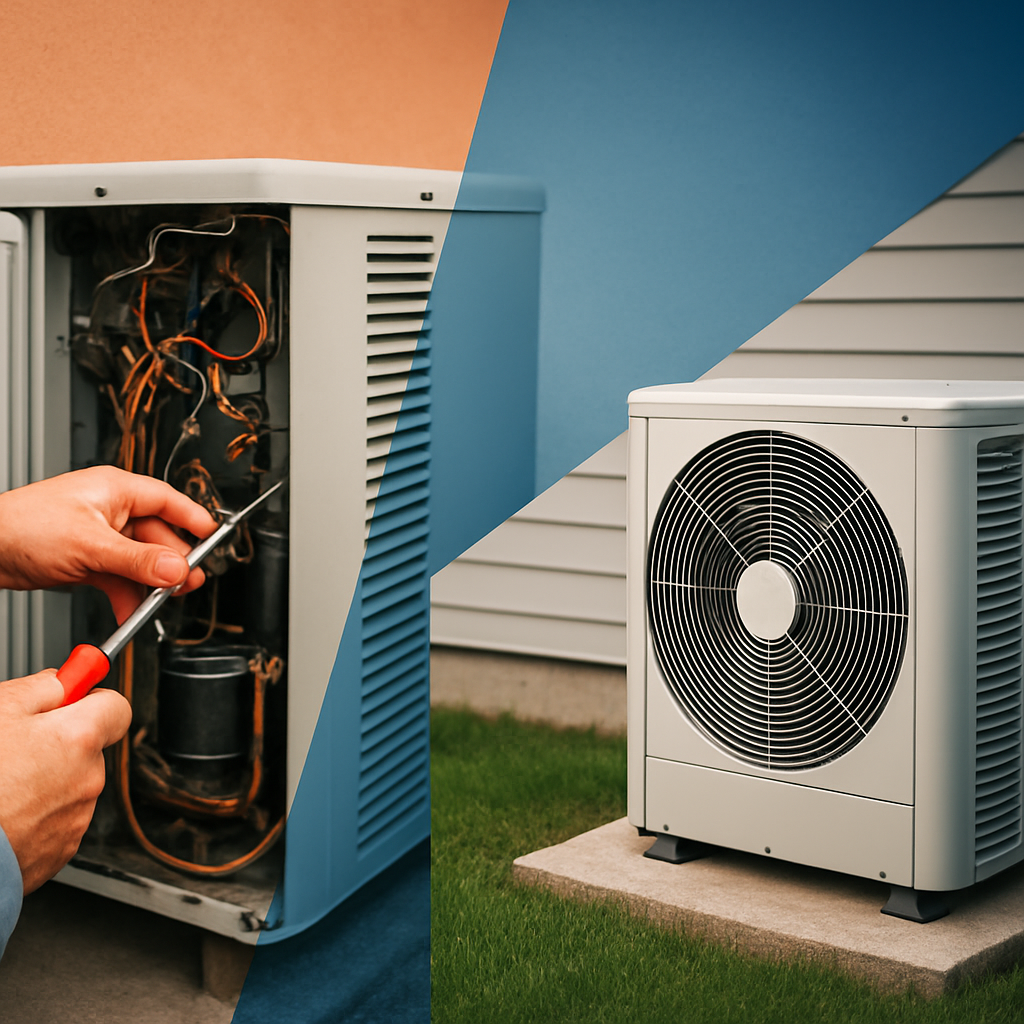
Heat Pump Repair vs. Replacement: How to Know Which Option Is Right for Your Home
When a heat pump acts up, homeowners face a tough choice: heat pump repair now or replacement later. This practical guide gives you a clear decision framework—covering system age, diagnostic findings, cost tradeoffs, energy impact, and warranties—so you can pick the option that best protects comfort and long-term operating costs. We’ll outline a simple payback approach and show how Eva Home Services can support you with credible diagnostics and transparent quotes.
1) Assess System Age and Condition
Two factors drive the repair-or-replace decision at this stage: system age and the immediate reliability signals captured during a professional check. An aging heat pump accumulates wear in the compressor, refrigerant lines, and boards, and those weak spots tend to reappear after a fix if the underlying age is a problem. Treat age as a screening tool: if the unit feels worn and the diagnostics point to multiple failing parts, replacement becomes financially reasonable even if a single fix is technically possible. Understanding this helps homeowners avoid chasing temporary fixes and facing another outage in the middle of winter.
To verify year, capacity, and warranty, start with the data plate on the outdoor unit and the indoor air handler to confirm the model year and rated capacity. Pull the installation date and service history from invoices or your contractor’s records, and confirm whether the unit is still under warranty and if a transfer is possible. Check refrigerant type and any constraints—older refrigerants can complicate repairs and raise costs. When possible, call the manufacturer to confirm warranty terms and whether coverage extends to replacement parts if the unit is no longer supported.
- Isolated failure and stable post-repair tests: if only one component shows wear and the system tests clean after service.
- Refrigerant leak or core component wear: visible leaks or a failing compressor/reversing valve indicate deeper problems.
- Fault codes reappear quickly: recurring diagnostics after repair suggest the underlying issue may be broader than the fix.
- Ductwork or airflow bottlenecks dominate comfort: issues in distribution can mask or magnify outdoor-unit problems.
- Multiple major components show wear: when several subsystems show age-related wear in one assessment, replacement becomes more likely.
Concrete example: A 12-year-old heat pump began frequent short cycling and rising energy bills. A service visit uncovered a refrigerant leak and a failing reversing valve. The repair quote was about $2,400, while a mid-range replacement unit was around $5,500. Given the unit’s age and the likelihood of further failures, replacement offered more reliable comfort and long-term energy savings despite the higher upfront cost.
Age alone isn’t a guarantee. A well-installed, modern unit can outperform an older system that suffered from poor ductwork or improper sizing. Conversely, a new unit will underperform if the ducts are leaky or the load calculation was misjudged. Use age as a screen, but verify with a holistic view of installation quality, duct integrity, and actual performance data pulled during diagnostics.
2) Understand the Repair vs Replacement Cost Tradeoffs
When a heat pump falters, the math matters more than the fear. You need to compare the immediate repair bill against the upfront replacement cost, then weigh how energy savings and reliability shift the long-term value.
Typical repair costs cluster around major components or sealed-system work. A compressor or refrigerant-related repair often lands in the $1,500–$3,500 range, while minor fixes like a valve or sensor can be substantially cheaper. By contrast, installing a mid-range heat pump typically runs around $5,000–$9,000, depending on ductwork, indoor units, and permitting.
A straightforward way to compare is a simple payback calculation that includes energy savings from improved efficiency. Use the incremental cost of replacement minus what you would have spent on repairs, divided by your annual energy savings from a new unit. In formula terms: Payback years ≈ (Creplace − Crepair) / Annual_Savings.
Concrete example: a 9-year-old heat pump develops refrigerant leaks and weaker heating performance. Repair is estimated at about $2,200. A mid-range replacement installed is about $6,800. If you expect roughly $260 per year in energy savings from the new unit, the simple payback is about (6,800 − 2,200) / 260 ≈ 16 years, signaling that repair keeps you in the long run unless reliability concerns push you toward replacement sooner.
Beyond the math, consider warranty coverage, refrigerant compatibility, and financing. A repair that collapses again within a warranty window may still be costlier in the long run than a replacement with a new warranty and better efficiency.
Next: arrange a transparent diagnostic and a price-breakdown for both paths with Eva Home Services, including an energy-efficiency upgrade discussion that aligns with your comfort goals.
3) Evaluate Energy Efficiency and Comfort Impacts
In the energy-efficiency lens, newer heat pumps deliver higher SEER and HSPF ratings, which translates into steadier indoor temperatures and lower operating costs over the system’s life. The numbers help, but comfort hinges on humidity control and consistent performance, not just efficiency labels. For current benchmarks, consult c cooling/heatpumps target=_blank>Energy Star and related guidance from energy authorities.
Even the most efficient outdoor unit can't deliver if the air moving through the house is compromised. If the ductwork is leaky, poorly sized, or chronically under-sealed, you won’t realize a new system’s full potential. In practice, a mid-sized home may require duct sealing or zone controls in addition to the equipment upgrade to achieve meaningful comfort gains.
Defrost cycles and climate performance matter beyond labels. In cold climates, modern heat pumps use low-defrost strategies and variable-speed compressors that smooth temperature swings and reduce outdoor unit noise. In hot climates, high-SEER models can lower peak cooling loads and moderating humidity, but you should pair them with a solid dehumidification plan and filtration to maintain indoor air quality.
- SEER/HSPF targets by climate: Align the ratings with local electricity rates and comfort goals; higher ratings justify higher upfront costs only if the payback window makes sense.
- Ductwork and IAQ considerations: Assess leakage, airflow, and zoning; improving ducts often yields more reliable comfort than upgrading the outdoor unit alone.
- Defrost, noise, and climate resilience: Consider how the system handles cold snaps, defrost cycles, and noise levels when choosing between single-stage, two-stage, or inverter-driven compressors.
- Warranty, maintenance, and rebates: Factor in coverage for the compressor, refrigerant, and control boards, plus available rebates that affect total cost and return on investment.
Concrete example: A 12-year-old air-source heat pump in a temperate climate runs at SEER 14/HSPF 8 and experiences frequent cycling and humidity swings. Replacing with a mid-range variable-speed unit at SEER 20/HSPF 10 yields an estimated 20–25% reduction in annual electricity use, improved humidity control, and fewer defrost interruptions. With current utility rebates and a moderate payback window, the upgrade pays back in roughly 6–9 years depending on local rates.
Takeaway: If energy costs and indoor comfort are your north star, run the math with price, rate forecasts, and rebates; replacement makes sense when the payback window is reasonable and the duct and controls are ready for the upgraded performance. If not, prioritize targeted repair and a robust maintenance plan to preserve reliability and avoid unnecessary upfront expense.
4) Warranty, Maintenance, and Warranty Transferability
Warranties decide risk in repair vs replacement. They cover different things depending on whether you’re repairing a component or replacing the entire system, and they come with conditions that can surprise you if you’re not paying attention. In practice, a typical heat pump repair warranty focuses on parts, sometimes excluding labor after a short window, while a full replacement often carries longer coverage on critical components like the compressor and coil, plus a separate labor warranty. The practical effect: a robust compressor or system warranty can tilt the decision toward replacement, but only if you can satisfy the maintenance and transferability requirements.
How to read warranty terms
Maintenance history matters more than most homeowners assume. Warranties are designed around regular tune-ups and prompt service by licensed HVAC technicians. If the system hasn’t received annual maintenance, you risk voiding some or all coverage, even for components that appear to be functioning. Your diagnostic should explicitly note whether coverage is still valid given the current maintenance record.
- Document all maintenance visits with receipts and notes on what was serviced.
- Confirm service is performed by a licensed technician using authorized parts.
- Check transferability rules if you plan to sell or refinance and whether there is a form to file.
- Clarify limits on refrigerant work and emissions-related components and whether those tasks have separate limits.
- Understand whether labor is covered, and for how long, and under what conditions.
Example: A 9-year-old air-source heat pump develops a refrigerant leak and the technician recommends compressor replacement. The compressor carries a 5-year warranty, but labor is limited to 1 year and only when service is performed by an authorized pro. Because the unit hasn’t had an annual tune-up in several years, the coverage may be questioned. With replacement, you gain new efficiency and a longer warranty on the whole package; with repair, you risk ongoing reliability and potentially higher energy bills if the rest of the system ages.
Financing, rebates, and utility incentives can swing the economics. A new heat pump often comes with longer warranties and favorable financing, which improves payback despite upfront costs. Eva Home Services can outline current options and help maximize value, including guidance on warranty transfer at time of sale and ensuring service records support coverage. For broader context, see Energy Star’s guidance on heat pumps during planning with us: cooling/heatpumps target=_blank>Energy Star heat pumps and our guidance on choosing a heating-cooling contractor: Choosing heating and cooling contractor guide.
5) Contractor Credibility and How to Ensure a Solid Diagnosis
A solid diagnosis hinges on credibility. Without it, you’re budgeting on guesswork about repair viability or the true value of replacement. A credible diagnosis names the root cause, frames options in real dollars, and is backed by data gathered during a site visit rather than a sales pitch. In practice, you should see a logical chain: observed symptoms, verifiable tests, and a quantified plan moving forward.
What credentials matter
- NATE certification and ongoing training for technicians
- Licensed HVAC contractor in your state with active status
- Manufacturer authorization or participation in an approved service program for your system
- Local references or a proven track record with residential heat pumps
A credible contractor will readily verify these credentials and present them upfront, not just on a business card. See if they can point to recent installations similar to yours and provide verifiable references. For context, you can compare how well different companies meet this baseline using a simple checklist and public records.
What a transparent diagnostic report should include
- Root cause and failure mode clearly described
- Repair vs replacement recommendation with a clear ROI and approximate payback
- Itemized costs: parts, labor, diagnostic fee, and any refrigerant charges
- Estimated remaining life of current components and expected performance under each option
- Warranty details, maintenance needs, and any duct or filtration considerations
Questions to ask during a consultation
- What tests and measurements support the diagnosis (refrigerant pressures, electrical readings, airflow, temperature splits)?
- Is the proposed plan based on observed failures, or a standard sales script?
- What is included in the price, and what could trigger extra charges?
- What is the projected life and warranty on the recommended components?
- Will any ductwork changes, air balancing, or filter upgrades be necessary?
- Can I get a written, time-limited quote and a second opinion option?
Concrete example: A homeowner with a 12-year-old air source heat pump gets a diagnostic that tags a failing compressor and a refrigerant leak. The report presents two paths: repair for about $1,800 or replacement with a mid-range unit for about $6,000, plus energy-savings projections. The diagnostic notes warranty status and a recommended maintenance plan to maximize reliability.
Practical trade-offs frequently surface here. A low bid that promises a quick fix may skip tests or omit hidden charges, while a high-cost replacement can be warranted only if the ROI justifies the expense. In practice, you want a diagnosis that ties to your actual loads, climate, and expected energy costs, not a canned sales pitch or an upsell for premium parts you don’t need.
Takeaway: Use this framework to evaluate credibility before you decide on repair or replacement. A transparent, data-backed diagnosis reduces risk and clarifies the true economics of each path.
6) Next Steps with Eva Home Services
After a heat pump shows aging or malfunction, the Next Steps with Eva Home Services are not guesswork. Eva's approach centers on a practical, evidence-based diagnostic that clearly separates repair viability from replacement ROI. The diagnostic framework unfolds in three concrete stages—onsite inspection, performance verification, and a cost-benefit analysis tied to your comfort goals and energy use. This isn’t about selling a fix; it’s about identifying what actually restores reliability and efficiency without overpaying for unnecessary replacement.
On the site, a licensed technician examines the heat pump system in detail: refrigerant charge and leaks, electrical connections and capacitor health, thermostat signaling, and the integrity of ductwork and filters. They run functional tests to verify heating and cooling outputs across typical conditions and check defrost performance. You’ll receive a transparent diagnostic report with measurements, photos, and a clear scope of work that shows what a repair would entail versus what a replacement would deliver.
Concrete example: in a 1,800-square-foot home with inconsistent comfort and rising bills, the tech found a failing outdoor compressor that would likely trigger more failures. A repair estimate came in around $1,200, but multiple aging components suggested a short horizon for reliability. We laid out a mid-range replacement at roughly $4,500–$5,500 with a higher SEER/HSPF, and a payback window of 4–6 years through energy savings plus improved humidity control. The decision hinged on expected lifespan and tolerance for potential outages.
Transparent pricing and financing options matter. The diagnostic report includes warranty considerations, maintenance needs, and how rebates or utility incentives can tilt the economics toward replacement or a longer repair horizon. Eva can bundle the replacement with related upgrades such as a higher-MERV filter, air sealing, or a service plan to ensure ongoing performance. The goal is a decision that sticks, not a quick fix that fails again in a season.
Take the next step with a site visit and a written, no-surprises quote that clearly compares repair viability, replacement ROI, and long-term reliability. Eva can walk you through financing options, rebates, and service plans to align with your budget and energy goals. To begin, schedule a diagnostic through our guide Choosing a heating-cooling contractor guide, and let Eva Home Services help you determine the best path forward.