The Complete Heating Tune-Up Checklist: Save Energy, Prevent Breakdowns, and Extend Your Furnace Life
A well-timed heating tune up cuts energy waste, reduces emergency breakdowns, and meaningfully extends the life of your furnace. This guide gives a prioritized, practical checklist – homeowner-safe tasks you can do yourself, technician-only inspections a licensed HVAC service should handle, plus typical cost ranges and clear warning signs that require a call-out. Use it to prepare for winter, document issues for a service visit, and decide whether to schedule professional maintenance with Eva Home Services LLC.
Why a Heating Tune-Up Matters and What a Good Tune-Up Delivers
Bottom line: a heating tune up is diagnostic work, not just cleaning. Beyond swapped filters and a thermostat battery, a proper service isolates hidden failure modes that drive emergency calls, unsafe operation, and the decision to repair versus replace.
Core outcomes a good tune-up must deliver
- Verified safety: combustion and carbon monoxide measurements, flue inspection, and confirmation that safety switches operate reliably.
- Documented performance baseline: temperature rise, supply/return delta, and blower amps recorded so you have numbers to compare year-to-year.
- Airflow and filtration checks: blower cleaning, filter condition assessment, and notes on duct restrictions or dirty returns that reduce efficiency.
- Controls and ignition reliability: thermostat calibration, control board diagnostics, and ignition/burner adjustment so the unit runs consistently.
- A clear service report: readable notes showing what was inspected, what failed or is marginal, and prioritized next steps with estimated costs.
Practical insight: the most valuable parts of a tune-up are the measurements and the report. Routine cleaning is cheap; the diagnostic numbers tell you whether the system is safe, efficient, and worth investing in. If a contractor skips recorded baseline readings, treat the visit as incomplete.
Limitation and trade-off: a single annual tune-up cannot fix long-running neglect. You can get meaningful performance improvement from maintenance, but deeply fouled heat exchangers, corroded venting, or collapsing ductwork require repair or replacement. Paying for a full diagnostic during the tune-up is money well spent when the technician documents chronic problems rather than patching symptoms.
Concrete Example: A homeowner with a 12-year-old gas furnace experienced frequent short cycling and rising bills. A professional tune-up that included blower cleaning, thermostat calibration, combustion analysis, and a heat exchanger visual check identified poor combustion due to clogged burners and an intermittent control relay. The fixes restored steady runtime and avoided an immediate heat exchanger replacement; the technician left a written record that justified scheduling a budgeted replacement the following season.
Any measurable carbon monoxide in living spaces or a flue measurement outside safe tolerances is a call-now condition. Shut the unit off and get a licensed technician immediately.
If you want guidance on what should appear in a service report or to schedule a technician who provides recorded baselines and safety testing, see Eva Home Services LLC HVAC or review federal guidance at U.S. Department of Energy.
When to Schedule: Timing and Triggers
Schedule before demand spikes. Book a professional heating tune up in the late summer to early fall so your furnace, boiler, or heat pump is inspected and baseline measurements are recorded before the system faces continuous heavy use.
Practical trade-off: booking early secures technician availability and avoids emergency surcharges, but scheduling months in advance can miss late-season wear (dust, pollen, or a summer plumbing leak) that shows up closer to first cold snaps. If you book early, plan a quick homeowner walk-through or a filter check closer to cold weather.
Seasonal windows and exceptions
For gas and oil furnaces schedule an annual check before the heating season. For heat pump tune ups consider a spring inspection if cooling usage is heavy, and again in fall for heating performance. New occupants, recently purchased homes, or units that sat idle all summer deserve an off-cycle inspection regardless of calendar timing.
- Immediate call triggers: persistent smelling of combustion or fuel, alarm-level carbon monoxide detection, visible soot or flame abnormalities on burners, or fuel leaks.
- High-priority service (schedule within 48 hours): repeated short cycling, unexplained surge in fuel or electric usage, frequent ignition failures, or water pooling near the furnace or flue pipe.
- Routine pre-season triggers: device error codes, noisy blower motor that worsened over months, thermostat that won’t hold setpoint, or vents with large temperature variance room-to-room.
Concrete Example: A property manager booked a fall tune-up but noticed the oil furnace short-cycling two weeks after moving tenants in. An emergency visit found a clogged condensate line on a high-efficiency unit causing pressure-switch faults. Addressing that immediately prevented a compressor lockout and an expensive winter replacement.
Real-world judgment: do not treat annual tune-ups as “set it and forget it.” Calendarized maintenance reduces risk, but most avoidable failures are caught by watching performance metrics and behavior between visits. If you see signs of degradation, calling early almost always costs less than waiting for an emergency repair.
Pre-Tune-Up Safety and Tools for Homeowners
Start prepared. Before you open any access panel, assemble homeowner-safe tools and set clear boundaries about what you will not touch. A sensible pre-tune-up kit and a few safety rules save time, prevent accidental damage, and make a technician visit far more productive when one is needed.
Essential homeowner-safe tools and why they matter
- Replacement filters – Know the exact size stamped on the filter frame and keep spare filters of the correct MERV range. Replacing a clogged filter is the most effective single homeowner action.
- Flashlight or headlamp – Good lighting reveals loose insulation, water stains, or obvious rust without opening guarded panels.
- Screwdriver set and long nut driver – Useful for removing simple service panels that are not labeled with electrical warnings. Do not proceed if a panel has a warning sticker.
- Shop vacuum with soft brush attachment – For cleaning dust from accessible blower housing faces and return grilles without blowing debris into sensors.
- Digital probe or infrared thermometer – Quick register and supply temperature checks help document uneven room performance that a technician will use diagnostically.
- Smartphone with camera and notepad app – Photograph the data plate, error codes, wiring labels, and take dated notes; this speeds diagnostics on a service call.
- Gloves, eye protection, and basic dust mask – Personal protection for dusty areas and when handling older filters or insulation.
Practical insight and tradeoff: Higher MERV filters improve particulate capture but increase resistance to airflow. For most older furnaces choose MERV 8 to 11 so you do not starve the blower. If you opt for higher MERV for allergy reasons, plan to replace filters more often and budget for a professional airflow check.
Safety rules every homeowner must follow
- Do not work on panels labeled with electrical or gas warnings – Those panels are connected to live circuits or gas components and belong to a licensed HVAC technician.
- Shut power to the unit at the main breaker before any cleaning near the cabinet – Label the breaker so a technician can quickly restore power for diagnostic tests.
- Keep combustion testing to professionals – Homeowners must not attempt to measure or adjust burners, gas pressure, or flame characteristics.
- Test your carbon monoxide alarm before starting any checks and treat any alarm as an emergency – Evacuate and call for professional help rather than trying to troubleshoot while exposed.
- Avoid compressed air on control boards or sensors – Blowing dust can dislodge delicate parts or push debris into the control electronics.
Concrete Example: A homeowner photographed the furnace data plate, replaced a dirty filter, and used an infrared thermometer to compare two supply registers. One register read 20 degrees Fahrenheit lower than the others. That single measurement and the photo of the unit model allowed the technician to identify a partially closed duct damper and a failing return grille, which were corrected in one visit instead of a longer diagnostic session.
Real-world judgment: Buying fancy diagnostic gear is a common mistake. Most homeowners get more value from a small set of reliable tools, accurate photos, and clean documentation. For anything involving combustion, gas, or electrical connections, do not improvise tools or procedures; schedule a licensed HVAC service and share your photos and notes to shorten the technician time on site.
Homeowner-Safe Checklist Items (Step-by-Step)
Do these first — they deliver most of the tune-up value and are safe for most homeowners. In roughly 30–60 minutes you can complete a short series of noninvasive checks that improve comfort, cut strain on the blower, and flag problems that need a licensed technician. Keep photos and a short log of measurements so a technician can use your notes rather than starting from scratch.
Step-by-step homeowner-safe actions
- Replace the air filter – Remove and confirm the exact size printed on the frame, note the MERV rating, and install a fresh filter with the arrow pointing toward the furnace. Tip: mark the date on the filter edge so you know when it was changed.
- Check thermostat operation – Replace batteries if needed, confirm mode (heat/auto), and test a manual call for heat. If you have a learning or smart thermostat, verify its sensor location is not behind curtains or near a heat source.
- Clear and clean registers and returns – Remove dust and lint with a brush attachment and ensure all registers are fully open or set to your planned balance. Stubborn return grilles often hide the biggest airflow losses.
- Keep the area around the unit clear – Remove stored boxes, paint cans, and textiles to maintain at least 24 inches of clearance; good clearance reduces overheating and lets the unit breathe.
- Visual cabinet scan only – With power off at the breaker, look for water stains, rust, loose vent joints visible outside sealed panels, frayed wiring at external connectors, or rodent nests. Photograph anything abnormal; do not open panels with electrical warnings.
- Accessible condensate/drain check – For high-efficiency units with visible PVC drain lines, confirm the trap is not clogged and that water flows when you pour a small amount into the drain pan. Standing water in the pan is a sign to call a technician.
- Simple temperature check – Use a basic infrared or probe thermometer at two supply registers and two returns; record the delta. Large room-to-room swings or a supply register much cooler than others is actionable evidence for a service visit.
- Log error codes and photos – Photograph the data plate, any blinking control-board codes visible through an access window, and abnormal parts. This reduces diagnostic time and often lowers the repair bill.
Practical trade-off: invest your time in documentation rather than trying to perform advanced fixes. A clear photo of an error code and two temperature readings will save a technician 15–30 minutes of on-site troubleshooting — and that matters when you are being billed by time.
Concrete Example: A homeowner replaced a heavily soiled filter, cleared a blocked return grille in a hallway, and measured supply registers before and after. Run time increased, short cycling stopped, and the technician who later visited used the homeowner photos to skip the initial diagnostics and focus on a marginal blower capacitor that was then replaced the same day.
Judgment: smart thermostats and frequent filter changes are high return on effort only when the heating system has adequate airflow and clean returns. Many people buy advanced controls hoping to fix systemic airflow or duct problems; that rarely works. Fix the airflow first, then optimize controls.
Technician-Only Checklist Items and What They Mean
Directly actionable items that affect safety or measured performance must be left to a licensed technician. These are not nitpicks; they are diagnostic procedures that expose unsafe combustion, electrical hazards, or airflow failures you cannot reliably detect with a flashlight and an infrared thermometer.
Combustion testing and carbon monoxide verification
What the technician does: uses a combustion analyzer to measure O2, CO2, CO, and stack temperature and compares results to manufacturer and code limits. Why it matters: a proper reading proves burners are burning cleanly and the flue is drawing correctly. Trade-off: pushing for marginally higher efficiency by leaning the mixture is never worth increased CO risk; experienced techs prioritize safe stoichiometry over a few decimal points of efficiency.
Heat exchanger inspection and vent integrity
What the technician does: inspects the exchanger with borescope or pressure/vacuum tests, checks vent connections, and verifies there is no flame roll-out or backdrafting. Practical consequence: a hairline crack that leaks combustion products into the air stream demands replacement, not a patch. In practice, many delayed replacements begin as intermittent symptoms that only a thorough inspection will reveal.
Gas pressure, burner adjustment, and ignition service
What the technician does: measures manifold pressure, tunes burners for correct flame shape and color, and inspects ignition safety circuits. Limitation: these adjustments change system behavior in ways a homeowner cannot predict; incorrect settings can create persistent safety or reliability problems, which is why regulation and licensing exist for this work.
Electrical diagnostics and control verification
What the technician does: tests relay function, tightens connections, measures motor amp draw, and runs control board diagnostics. Judgment: loose or corroded electrical connections are a leading cause of intermittent faults; a competent technician documents amps and voltages so future troubleshooting starts from data instead of guesswork.
Airflow and static pressure measurement
What the technician does: measures supply and return static pressures and compares CFM to manufacturer targets, inspects blower motor performance, and locates major duct leaks. Trade-off: solving low airflow often requires ductwork fixes or a different blower; a technician-only diagnosis prevents buying a new thermostat or oversized equipment that won’t fix the real problem.
| Technician Task | Why homeowners should not attempt | Immediate risk if skipped |
|---|---|---|
| Combustion analyzer and CO check | Requires calibrated instruments and knowledge of flue chemistry | Undetected CO or incomplete combustion leading to poisoning |
| Heat exchanger borescope/pressure test | Needs specialized access and interpretation of subtle signs | Combustion gases entering living space; unit condemned |
| Gas pressure and burner tuning | Adjustments affect safety devices and fuel delivery | Flame instability, soot, higher CO, equipment damage |
| Electrical tightening and amp measurements | Live circuits and motor-start conditions require safe procedures | Arcing, component failure, or false intermittent faults |
| Static pressure and duct leakage diagnostics | Involves test ports, manometers, and system balancing | Poor comfort, short cycling, and premature motor wear |
Concrete example: a homeowner called for noisy cycling. The technician measured excessive return static pressure and found a blocked duct branch and a failing blower capacitor. Fixing the duct and replacing the capacitor eliminated the noise and restored proper runtime; without the static pressure test the job would likely have resulted in repeated callbacks and unnecessary parts changes.
Performance Targets, Measurements, and How to Interpret Them
Start with recorded baselines, not impressions. A meaningful heating tune up produces a short list of measurements you can compare year-to-year: supply and return temperatures, operation cycle lengths, evidence of airflow restriction, and documented safety readings from a technician. If your service visit does not leave you with numbers and photos, the visit was incomplete.
Key measurements, what they diagnose, and who should take them
- Temperature rise (supply minus return): Homeowners can record this with a probe thermometer at a supply and a nearby return register. The number alone is not meaningful unless compared to the furnace data plate or the technician's recorded target.
- Run cycle and short-cycling pattern: Note how long the burner or heat call runs and how quickly it cycles off. Frequent short cycles are a practical sign of airflow restriction, oversized equipment, or control faults and usually require a technician to diagnose.
- Register balance snapshot: Measure two or three supply registers using an infrared or probe thermometer. Large room-to-room differences point to duct issues, closed dampers, or blocked returns — often inexpensive fixes compared to replacing the furnace.
- Blower motor amp trend: Technicians measure motor amps to assess wear and drag. A rising amp draw across visits is an early indicator of bearing failure, a dirty blower wheel, or progressive duct restriction.
- Static pressure and CFM (technician-only): These are diagnostic numbers that reveal whether the blower and ducts are delivering the manufacturer-intended airflow. They determine whether a filter upgrade or duct repairs are the right fix versus replacing equipment.
- Combustion and CO readings (technician-only): Calibrated analyzers verify safe combustion and venting. Never attempt to interpret burner behavior without these measurements; visual flame checks are not a substitute.
Practical tradeoff: collecting more data costs time and sometimes a small extra charge, but cheap or cosmetic tune-ups that skip static pressure and amp readings often leave the real problem undiscovered. Pay for the diagnostic if you want a service that prevents repeat callbacks.
Concrete Example: A homeowner logged supply/return temperatures and found one register consistently much cooler than the rest. The technician measured elevated return static pressure and discovered a collapsed branch in an attic run. Fixing that duct restored even heat, reduced blower stress, and avoided an unnecessary blower motor replacement.
If a measured value is outside the manufacturer specification in the service report, treat it as actionable. Ask the technician for the target numbers and the recommended fix—do not accept vague assurances.
Final judgment: insist on recorded diagnostics and simple explanations. Trend data prevents surprise failures and lets you decide whether repairs will meaningfully extend life or whether replacement is the cleaner investment. If the technician cannot or will not provide numbers you can keep, consider a different contractor.
Cost, Return on Investment, and Decision Points: Repair Versus Replace
Straight answer: treat the repair-versus-replace choice as a financial decision informed by age, safety, reliability, and realistic energy payback — not an emotional reaction to a single noisy part. Make the choice with written diagnostics and two clear numbers: the repair cost and the installed replacement price including basic labor.
A practical decision checklist
- Age and expected remaining life: If the furnace is under 10 years and otherwise healthy, repairs usually make sense. Between 10 and 15 years, weigh how many major repairs have occurred; over 15 years, replacement is frequently the better long-term buy.
- Safety-critical failures: Any heat exchanger defect, confirmed venting failure, or persistent combustion irregularity means replace or remove from service immediately — this is not negotiable.
- Cumulative repair cost rule: If a single repair or the sum of likely repairs approaches 40 to 50% of a reasonable replacement quote, replace. Repaired units tend to attract follow-up failures that make repeated small bills expensive and inconvenient.
- Energy payback reality: New high-efficiency furnaces reduce fuel use, but the energy savings typically pay back slowly. Replace for comfort and reliability first; expect efficiency gains to be a secondary financial benefit unless you qualify for rebates or tax incentives.
- Operational reliability: Frequent callbacks (more than two major callouts in a year) indicate hidden wear. Reliability value — fewer emergencies, stable runtime — is a legitimate reason to replace even if upfront savings are modest.
- Get two numbers in writing: a detailed repair estimate (parts, labor, warranty) and a full replacement quote that includes disposal, basic duct modifications if needed, and manufacturer warranty details.
Trade-off to accept: replacement fixes reliability and gives you warranty coverage, but it is a large upfront expense and often requires planning. Repair preserves capital now, but carries the risk of cascading failures and higher cumulative cost over time.
Concrete example: A homeowner had a 14-year-old gas furnace with an intermittent control board failure and a failing blower motor. The repair estimate was $1,250 (parts and labor) and the replacement quote for a like-capacity high-efficiency unit was $4,800 installed. Because the unit was near the end of its expected life and had had multiple recent failures, replacing it avoided another likely $800+ failure in the same season and came with a 10-year parts warranty — the pragmatic choice was replacement.
Judgment most people miss: chasing marginal efficiency gains on an old, unreliable furnace rarely makes financial sense. The right time to replace is when reliability and safety begin to cost more in repairs, time, and risk than a modern unit will save in fuel.
- Steps to decide with confidence: 1) Request a written diagnostic report with baseline numbers and photos; 2) Obtain separate written repair and replacement estimates; 3) Check available rebates, local incentives, and warranty terms; 4) Compare lifecycle cost over at least five years, not just the immediate bill.
- When to call us: If you want a diagnostic visit that includes measured baselines and a clear repair-vs-replace recommendation, schedule a professional inspection at Eva Home Services LLC HVAC.
Key takeaway: Use age, safety condition, repair frequency, and a comparison of written costs to make the repair-or-replace decision. Favor replacement when repairs reach roughly half the cost of a new installed unit or when safety/heat exchanger issues appear.
Next consideration: before authorizing work, ask the technician to list expected near-term failure modes and how long the proposed repair should reasonably extend the unit's life. That one question separates a short-term patch from a sensible, longer-term decision.
How Eva Home Services LLC Delivers a Professional Tune-Up and Next Steps
Direct approach: Eva Home Services treats a heating tune up as a structured diagnostic visit rather than a quick cleaning. Technicians arrive prepared to verify safety, measure performance, and leave you with documented baselines so future problems are easier to track.
Typical visit flow — what you should expect
- Pre-visit confirmation: Technician reviews the system model and your recent symptoms from photos or notes you supplied. This reduces wasted time and often lowers the bill because the tech arrives with the correct parts and test probes.
- Initial safety and visual check: Certified tech verifies carbon monoxide alarms, inspects venting and the exterior of the heat exchanger, and confirms there are no immediate shutdown conditions before starting tests.
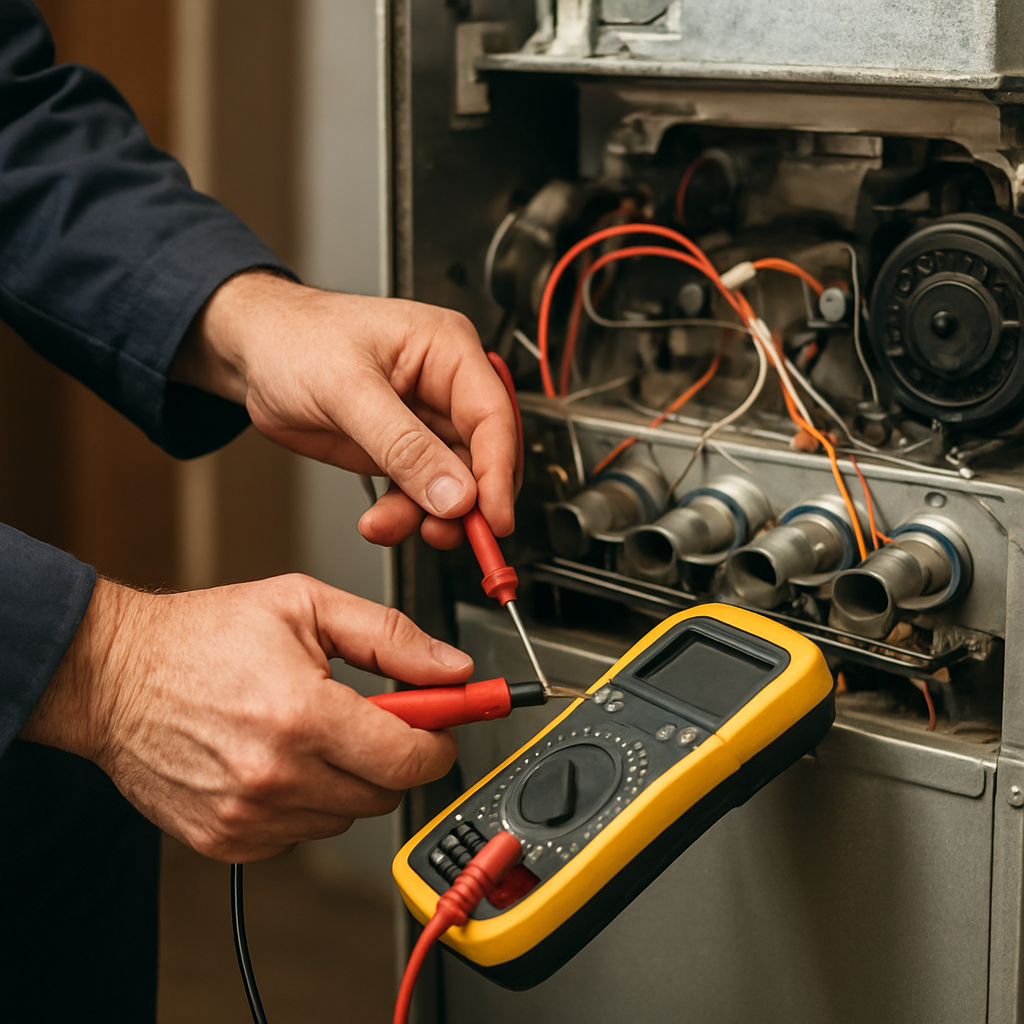
- Measured diagnostics: Combustion analysis, blower motor amp draw, and static pressure checks are run and recorded. These are the numbers that distinguish a cosmetic tune-up from a proper HVAC service.
- Corrective maintenance on scope: Filter check/replacement, burner cleaning or adjustment, thermostat calibration, blower cleaning, lubrication where applicable, and tightening of accessible electrical connections. Any technician-only adjustments that affect combustion or gas pressure are documented and explained.
- Walkthrough and report: Technician reviews recorded readings, shows failure points with photos, and provides a prioritized action list with written estimates for repairs or replacement if needed.
- Maintenance plan offer and scheduling: If you want recurring care, the tech outlines the maintenance agreement benefits (priority scheduling, service discounts, documented history) and can book the next visit before leaving.
Practical trade-off: A basic visit that only replaces filters and vacuums the cabinet is fast and cheap but rarely uncovers intermittent or safety issues. Paying a bit more for the measured diagnostics — combustion numbers, amps, and static pressure — usually prevents repeat callbacks and expensive emergency repairs.
Concrete example: A homeowner scheduled a standard heating tune up and expected only a filter change. Because they sent photos ahead of time, the technician brought a borescope, found a hairline flue joint separation, and caught intermittent backdrafting. The tech secured the venting, documented the combustion readings, and recommended a monitored replacement plan rather than an immediate, costly full replacement.
Judgment call: If a contractor resists leaving measured baselines or refuses to show the combustion and CO results, consider that a red flag. Real professional HVAC service prioritizes documented safety over fast salesmanship; lifetime value comes from records you can compare year to year.